
Your world in Natural Stone
The History of Spanish Marble: Why Novelda Became the Heart of the Industry
Spain is one of the world’s most important producers of natural stone, known for its wide variety of marbles, limestones, and decorative stones. Among all Spanish regions, the town of Novelda stands out as the historic center of the country’s marble industry. Located in the province of Alicante, Novelda has been closely connected to marble extraction, processing, and international trade for more than a century.
Today, Spanish marble from this region is exported worldwide and used in prestigious architectural and interior design projects.
Early Origins of Marble in the Alicante Region
Natural stone has been part of the culture and architecture of southeastern Spain for centuries. The region around Novelda is rich in limestone and marble deposits, which have been used in local construction since ancient times.
However, the marble industry truly began to develop during the late 19th and early 20th centuries, when quarrying activities expanded and transportation improved. The arrival of railway connections allowed marble blocks and finished stone to be transported more efficiently to other parts of Spain and eventually to international markets.
This marked the beginning of Novelda’s transformation into a specialized stone-processing hub.
The Birth of the “Marble Corridor”
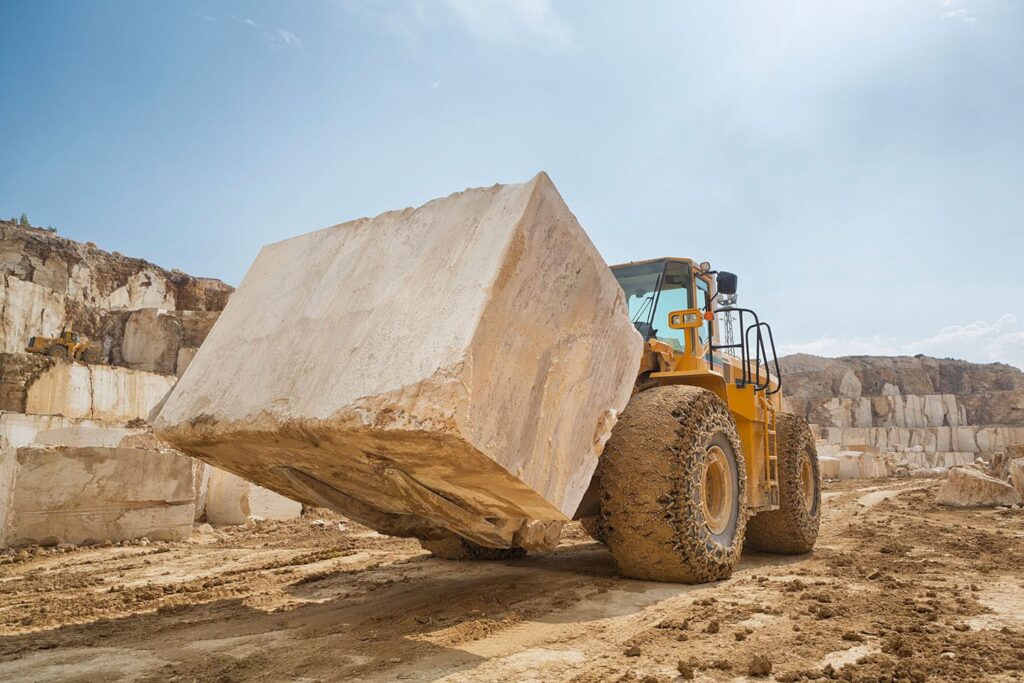
The marble industry in the region is concentrated in what is often called the “Marble Corridor”, an area that includes several towns in the Medio Vinalopó region such as Monforte del Cid, Pinoso, La Romana, Monóvar, and Elda.
These towns are home to many of Spain’s most famous quarries and factories. Over time, they developed a highly specialized ecosystem that includes quarry operators, slab factories, stone processors, exporters, and logistics companies.
Today, the Valencian Community remains one of the leading regions for natural stone extraction and processing in Spain.
Famous Spanish Marbles from the Region
Several internationally recognized marbles originate from quarries near Novelda. Among the most famous are:
- Crema Marfil – One of the most widely used beige marbles in architecture and interior design.
- Rojo Alicante – A striking red marble with white veining.
- Dark Emperador – A deep brown marble with light veins.
- Bateig Stone – A natural limestone widely used in façades and historical buildings.
These materials have been used in buildings across Europe, the Middle East, Asia, and the Americas.
Industrial Growth in the 20th Century
During the mid-20th century, the marble industry in the Novelda region expanded rapidly. After the Spanish Civil War, reconstruction projects and new public buildings created strong demand for decorative stone.
Quarries increased production, and factories began adopting more advanced cutting and polishing technologies. By the 1950s and 1960s, marble companies in Novelda were already exporting stone internationally and developing long-term trade relationships.
Over time, the town became known as one of the main centers of the marble industry in Spain.
Spanish Marble in the Global Market
Today, Spain is one of the world’s leading exporters of natural stone, competing with countries such as Italy, Turkey, and Iran in the international marble market.
The Alicante marble sector alone involves hundreds of companies working in quarrying, processing, and export. Many of these companies are located in the towns of the Marble Corridor, with Novelda acting as the central hub for production and distribution.
The Future of Marble in Novelda
Despite economic challenges over the decades, the marble industry in Novelda continues to evolve. Modern factories now use advanced machinery, digital production methods, and improved sustainability practices.
At the same time, the tradition and craftsmanship developed over generations remain a fundamental part of the industry.
For companies working in the sector today, the goal is clear: to continue bringing high-quality Spanish marble to projects around the world while preserving the region’s long-standing stone heritage.